Queen vs Double Mattress Size: An In-Depth Comparison
A detailed guide comparing queen and double mattress sizes, covering dimensions, room fit, bedding, and setup tips to help you choose the right mattress size.


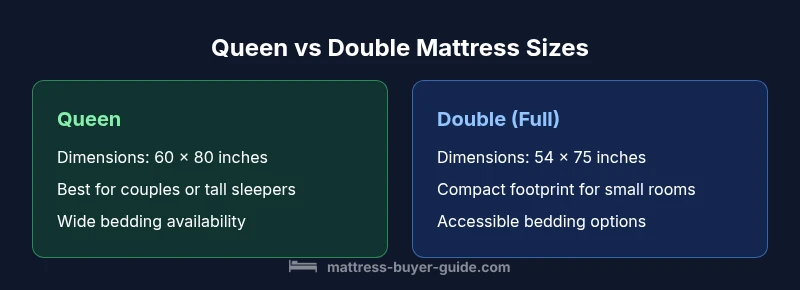
For most bedrooms, a queen mattress offers more space without overpowering the room. A queen measures 60 x 80 inches, while a full/double sits at 54 x 75 inches. If you share the bed or are tall, the queen provides extra width and length to minimize nighttime disturbances.
The Practical Significance of Mattress Sizing
Understanding the size of queen mattress vs double helps align sleep space with room volume and lifestyle. According to Mattress Buyer Guide, size decisions influence how you move at night, position beds with other furniture, and plan bedding purchases. In general, mattress size is not just about lying flat; it affects how you roll over, read in bed, and share a surface with a partner or pet. This section sets the stage by explaining how size influences sleep quality, room dynamics, and daily routines. We’ll examine dimensions, weight, and how these factors integrate with typical bedroom layouts. For couples, couples with pets, and solo sleepers who value extra space, the difference between 60x80 inches and 54x75 inches becomes a practical consideration rather than a cosmetic choice. The Mattress Buyer Guide team found that many shoppers underestimate the impact of a few inches on movement and wake-ups. By choosing the right size upfront, you reduce nighttime disturbances, minimize sprawl, and simplify future updates to sheets and foundations.
Queen vs Double: Exact Dimensions and What They Mean
The core difference between the size of queen mattress vs double is straightforward: width and length. A standard queen is 60 inches wide by 80 inches long, while a full or double is 54 inches wide by 75 inches long. Those 6 inches of extra width on a queen translate into more space for two people to stretch without colliding, while the extra 5 inches in length benefit taller sleepers who might otherwise end up with feet hanging over the edge. When you map these measurements to your floor plan, you’ll see how much walking space around the bed remains for nightstands, dressers, and doors. This isn’t just a luxury—it directly affects daily living, movement, and bed-making ease. If you frequently lie near the edge or sleep with a partner who shifts position, the queen’s geometry can significantly reduce sleep interruptions and the “falling off” feeling at night.
Room Fit and Layout Considerations
Room geometry matters as much as bed size. In smaller bedrooms, the extra width of a queen can still fit, but you’ll want to verify door swing, dresser clearance, and walkways. A common guideline is to maintain at least 24 inches of clear space around the bed for easy navigation and bedside table access. If you’re working with a compact room, the queen’s added length can be beneficial, but consider a carefully planned layout to avoid cramped corridors. For rooms that double as guest spaces, a double may maximize usable space and enhance traffic flow. Remember that the bed is the focal point—ensure it aligns with windows, closets, and lighting so you aren’t constantly reaching around furniture while getting in and out of bed. This section highlights practical layout strategies and a quick mental check for your own space.
Bedding, Foundations, and Accessories
Different mattress sizes require corresponding foundations, frames, and sheets. The queen’s most common standard sizes make it easy to source compatible bedding, foundations, and bed frames, while doubles also enjoy broad availability but may constrain certain modular setups. When upgrading from a double to a queen, you’ll likely need new fitted sheets and possibly a larger bed frame or headboard. Check existing panels, slats, and center supports to ensure compatibility with the queen’s weight distribution. If you share the bed, consider two separate nightstands or a wider headboard to accommodate personal items and reading lights. This section walks you through essential accessories, from fitted sheets to protective covers, ensuring you buy the right components for your chosen size.
Sleep Quality Scenarios: Who Benefits from Each Size
The size you choose can influence sleep quality in tangible ways. Couples who value space and movement evenings may sleep more soundly on a queen, reducing contact and restlessness. Taller sleepers often benefit from the extra inches, especially if they tend to stretch out. Solo sleepers in small rooms can still feel comfortable on a double by optimizing layout, but the queen typically offers a more comfortable long-term option if space becomes available. If you regularly share the bed with children or pets, the queen again tends to minimize shared disturbances. This section analyzes common sleeping scenarios and links them to size decisions, helping you translate lifestyle needs into a concrete mattress choice.
Budget and Long-Term Value Considerations
Price differences between queen and double vary by brand, materials, and retailer, but you can expect a queen to require a higher upfront investment than a double. Over the long term, the added space is often worth the cost for couples and growing sleep needs, with the potential for higher resale value if you move up later. Consider the full ownership cycle: frame, foundation, sheets, mattress protector, and maintenance costs. Many shoppers find that investing in a queen size pays off through enhanced comfort, better sleep quality, and a reduced need to upgrade again soon. This section helps budget-conscious buyers weigh immediate costs against long-term value and sleep outcomes. Mattress Buyer Guide analysis shows that room fit and partner sleep needs should drive the decision as much as price.
Real-World Layout Scenarios: Small Bedrooms, Master Suites, Apartments
In apartments or small bedrooms, it’s common to measure the bed footprint against doorways and closet access to prevent obstruction. A queen can still fit with smart arrangement and slender nightstands, while a double might maximize floor space for a desk or seating area. In master suites, the queen largely satisfies couples seeking generous space without overwhelming the room, and can be paired with a larger dresser, seating area, or sitting nook. By examining typical layouts—bed against a wall, opposite a window, or centered between two windows—you’ll understand how the size of queen mattress vs double influences design choices and comfort. If you frequently host guests, a queen can offer flexibility for daytime use of the room while preserving privacy and sleeping space at night.
Maintenance and Longevity: Fit, Rotations, and Tumble
Regardless of size, regular mattress care extends comfort and lifespan. Rotate or flip when recommended by the manufacturer, vacuum to reduce dust mites, and use a mattress protector to guard against spills and stains. A queen typically requires a heavier load-bearing foundation, especially with higher-end foams or hybrids, so ensure your frame and base can support load over time. The choice between a queen and double can affect maintenance patterns, quiet bed movement, and the frequency of sheet changes. Understanding these practical maintenance needs helps you plan for longevity and consistent sleep quality across sizes.
Quick Decision Checklist
- Measure your room and ensure at least 24 inches of clearance around the bed.
- Consider your sleeping partner’s needs and tall sleepers for length and width requirements.
- Check frame and foundation compatibility with your chosen size.
- Evaluate bedding availability and potential upgrade costs.
- Weigh upfront costs against long-term comfort and flexibility.
Comparison
| Feature | Queen | Double (Full) |
|---|---|---|
| Dimensions (W x L) | 60 x 80 inches | 54 x 75 inches |
| Room footprint | Moderate; fits most bedrooms | Smaller footprint; easier in tight rooms |
| Best for | Couples or taller sleepers seeking space | Solo sleepers in compact spaces or guests |
| Sheets & Foundations | Widely available for queen; most brands offer compatible foundations | Widely available; standard full sheets and foundations common |
| Approx. upfront cost (range) | Higher upfront cost; long-term value often justified | Lower upfront cost; budget-friendly entry size |
| Frame compatibility | Standard queen frames and foundations widely compatible | Standard full frames generally compatible; check slat/support setup |
The Good
- Queen size offers more sleeping space for couples and taller sleepers
- Widely available bedding and foundations across retailers
- Better resale value and flexibility for room reconfiguration
- Improved comfort with broader sheet and accessory options
Cons
- Higher upfront cost compared to a double
- Takes more room in smaller bedrooms and tight layouts
- Sheets and foundations for queen can be heavier and sometimes pricier
Queen is generally the better long-term sleep solution for couples and taller sleepers, due to space and comfort advantages.
Choosing a queen over a double improves sleep quality in shared beds and tall sleepers. If room size and budget allow, the queen’s added width and length reduce disturbances and support a flexible room layout; otherwise, a well-planned double remains a viable space-saving option.
FAQ
How does the size difference between queen and double translate in real room space?
The queen adds about 6 inches in width and 5 inches in length compared with a double. In practice, this extra space translates to more freedom to shift positions and less contact between partners, especially if you tend to move at night.
A queen adds space, so you’re less likely to bump into your partner at night.
Is a queen bed better for couples or shared sleeping spaces?
Yes. For couples, the extra width helps reduce sleep interruptions and allows both people to roll toward the center rather than colliding near the edges. It’s also more forgiving for pets who share the bed.
For couples, queen is usually the better choice for space and comfort.
Can a queen fit in a small bedroom?
A queen can fit in many small bedrooms, but it must be planned with other furniture and door clearance in mind. Consider layout optimizations and possibly a platform or low-profile frame to maximize visible floor space.
Yes, but plan the layout carefully to keep pathways clear.
Do I need new bedding when upgrading to a queen?
Almost always. A queen requires new fitted sheets, flat sheet, and often a larger quilt or comforter. Check your existing bedding compatibility before purchasing.
Upgrading bedding is usually necessary when moving to queen size.
Is the price difference between queen and double significant?
Prices vary by material and brand, but queens generally cost more upfront than doubles. Consider ongoing costs like sheets and frames to assess overall value.
Yes, there’s usually a higher upfront cost for queen bedding and frames.
Highlights
- Prioritize room dimensions before buying a bed
- Choose queen for couples or tall sleepers
- Account for bed frame and sheet availability when upgrading
- Assess long-term value versus upfront cost
- Plan 24-inch clearance around the bed for accessibility